
Uncategorized
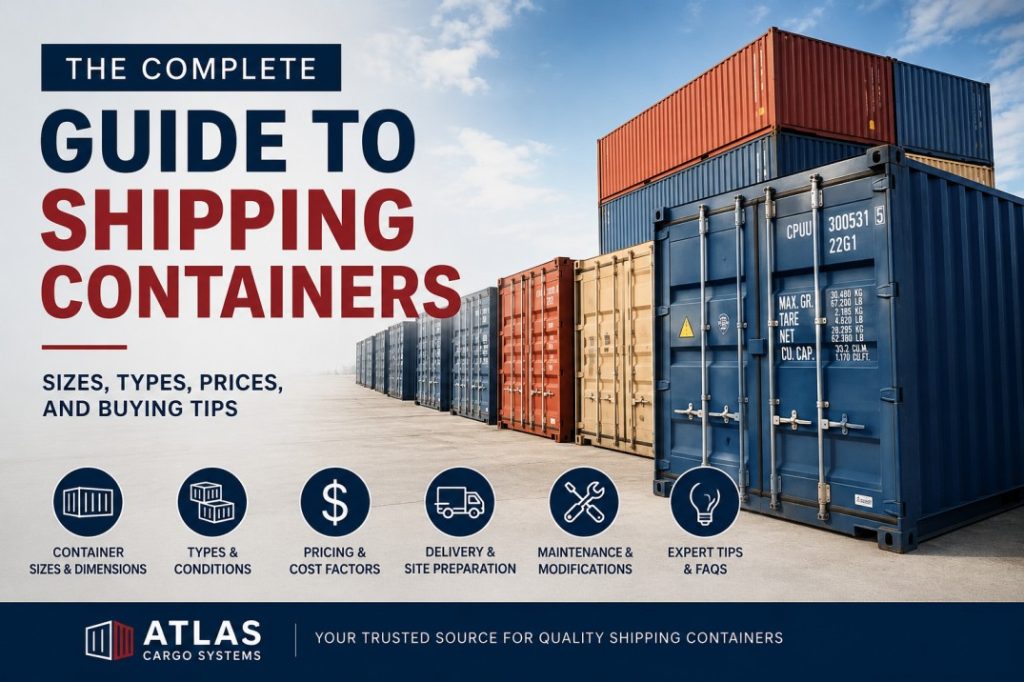
The Complete Guide to Shipping Containers (2026)
Jul
Choosing the right shipping container is an important decision whether you need secure storage, reliable transportation, or a customized workspace. This complete guide to shipping containers explains everything you need to know before buying a container. You’ll learn about the different container types, standard sizes, pricing factors, delivery requirements, maintenance tips, and practical buying advice so you can make an informed decision.
Shipping containers have become one of the most versatile storage solutions available. Businesses use them to protect inventory, contractors store equipment inside them, farmers secure machinery and feed, and homeowners rely on them for extra storage during renovations or moves. Because they are built from heavy-duty steel and designed to withstand harsh environments, they provide dependable performance for many years.
What Is a Shipping Container?
A shipping container is a standardized steel container designed to transport cargo safely by ship, rail, and truck. Manufacturers build these containers to international standards so they can move efficiently through ports and logistics networks around the world.
Today, shipping containers serve many purposes beyond international shipping. They provide secure storage, temporary offices, workshops, retail spaces, equipment rooms, and customized commercial buildings. Their strength, portability, and long service life make them an excellent investment for both residential and commercial users.
Why Shipping Containers Are So Popular
Shipping containers continue to grow in popularity because they offer several important advantages.
1. Excellent Durability
Shipping containers are manufactured from corrosion-resistant Corten steel. This material helps them withstand rain, wind, snow, and demanding working environments.
2. Strong Security
Heavy-duty steel walls and lockable cargo doors help protect valuable tools, equipment, inventory, and personal belongings.
3. Long Service Life
With proper care, a quality shipping container can provide dependable service for decades.
4. Portability
Unlike permanent buildings, containers can be relocated whenever your business or project requires a new location.
5. Versatility
Shipping containers can be used for storage, transportation, offices, workshops, pop-up shops, agricultural buildings, and countless other applications.
Types of Shipping Containers
Choosing the correct container begins with understanding the different options available.
Standard Dry Containers
Standard containers are the most common option on the market. They are ideal for:
- General storage
- Household goods
- Construction equipment
- Retail inventory
- Business supplies
- Agricultural storage
High Cube Containers
High Cube containers offer approximately one additional foot of interior height compared to standard containers.
They work well for:
- Large equipment
- Shelving systems
- Furniture
- Warehouse inventory
- Container conversions
Refrigerated Containers
Refrigerated containers maintain controlled temperatures for products that require cold storage.
Common applications include:
- Food storage
- Pharmaceuticals
- Medical supplies
- Floral products
- Temperature-sensitive inventory
Open Side Containers
Open Side containers feature large side-opening doors that provide easier access to oversized cargo.
Double Door Containers
Double Door containers include cargo doors at both ends, allowing faster loading and unloading.
Open Top Containers
Open Top containers allow heavy equipment or oversized materials to be loaded from above using cranes.
Standard Shipping Container Sizes
Selecting the right size is one of the most important decisions you’ll make.
| Container Size | Best For |
|---|---|
| 10ft | Small residential storage |
| 20ft | General storage and transportation |
| 40ft | Commercial storage and large projects |
| 40ft High Cube | Maximum storage with extra height |
Smaller containers work well for limited storage needs, while larger containers provide greater capacity for businesses and construction projects.
Common Uses for Shipping Containers
Shipping containers serve many industries because they are flexible and dependable.
Business Storage
Businesses use containers to store inventory, seasonal products, office furniture, and equipment.
Construction Sites
Contractors rely on containers to protect valuable tools, machinery, and construction materials.
Farms
Farm owners store tractors, feed, irrigation equipment, fencing supplies, and seasonal machinery inside containers.
Residential Storage
Homeowners use containers during renovations, moves, or when additional storage space is required.
Workshops
Many customers convert containers into secure workshops complete with shelving, lighting, and workbenches.
New vs. Used Shipping Containers
Both options offer advantages depending on your budget and intended use.
New (One-Trip) Containers
Advantages include:
- Excellent appearance
- Longer expected lifespan
- Minimal wear
- Ideal for modifications
- Professional presentation
Best suited for:
- Businesses
- Retail locations
- Offices
- Premium storage
Used Containers
Advantages include:
- Lower purchase price
- Strong structural integrity
- Excellent value
- Reliable storage solution
Best suited for:
- Construction sites
- Farms
- Equipment storage
- Workshops
How Much Do Shipping Containers Cost?
Shipping container prices vary depending on several factors.
These include:
- Size
- Condition
- Age
- Location
- Delivery distance
- Market demand
- Modifications
Rather than focusing only on the purchase price, consider the total cost of ownership, including delivery, site preparation, and any upgrades you may require.
How to Choose the Right Shipping Container
Before purchasing a shipping container, ask yourself these questions:
- What will I store?
- How much space do I need?
- Will I move the container later?
- Do I need extra height?
- Should I buy new or used?
- Is my site ready for delivery?
Answering these questions helps you choose the right container while avoiding unnecessary costs.
Preparing for Delivery
Proper planning helps ensure a smooth delivery.
Before your container arrives:
- Level the installation area.
- Remove obstacles.
- Confirm truck access.
- Prepare a stable foundation.
- Leave enough space to open the cargo doors completely.
Taking these steps helps speed up installation and reduces the risk of delays.
Shipping Container Maintenance
Routine maintenance helps extend the life of your container.
Follow these simple practices:
- Inspect the roof regularly.
- Remove standing water.
- Touch up damaged paint.
- Lubricate door hinges.
- Check door seals.
- Keep the interior clean and dry.
- Improve ventilation to reduce condensation.
Small maintenance tasks performed regularly can prevent larger problems later.
Best Practices for Buying a Shipping Container
- Define your storage requirements before shopping.
- Measure your available installation space.
- Choose a reputable supplier.
- Compare container conditions carefully.
- Inspect the container whenever possible.
- Plan your delivery before placing an order.
- Think about future expansion needs.
Expert Buying Tips
If you expect your storage needs to grow, purchasing a slightly larger container today may save money in the future.
High Cube containers provide additional vertical space that makes shelving, stacking, and equipment storage much easier.
If appearance matters for your business, consider investing in a one-trip container because it typically offers the best cosmetic condition.
Frequently Asked Questions
How long do shipping containers last?
With proper maintenance, many shipping containers remain in excellent condition for 25 years or more.
Are shipping containers waterproof?
Most quality containers are designed to be wind and watertight, helping protect stored items from weather.
Can I modify a shipping container?
Yes. Many containers are converted into offices, workshops, storage buildings, and retail spaces.
Should I buy a new or used container?
If appearance and longevity are priorities, a new container is often the better choice. If budget is your primary concern, a quality used container offers excellent value.
What size shipping container should I buy?
The right size depends on your available space, storage requirements, and future plans.
Conclusion
Shipping containers have become one of the most practical storage and transportation solutions available. Their durability, security, flexibility, and long service life make them suitable for homeowners, businesses, contractors, and agricultural operations alike.
Before making a purchase, evaluate your storage needs, compare the available container types, and prepare your site for delivery. Taking the time to choose the right container will help you maximize your investment for years to come.
Whether you’re looking for secure storage, a portable workspace, or a dependable shipping solution, Atlas Cargo Systems is committed to helping you find the right container for your project.
