
Buying Guides
Refrigerated Shipping Containers: The Complete Buyer’s Guide (2026)
Jul
Refrigerated Shipping Containers: The Complete Buyer’s Guide (2026)
Introduction
Refrigerated shipping containers, commonly known as reefer containers, provide a reliable and efficient solution for temperature-controlled storage and transportation. Businesses across multiple industries rely on these containers to protect perishable and temperature-sensitive products throughout the year.
Whether you operate a restaurant, farm, pharmaceutical company, food distribution business, or construction project, refrigerated containers offer the flexibility and performance needed to maintain precise temperature conditions.
In this guide, you’ll learn everything you need to know about refrigerated shipping containers, including their features, dimensions, applications, pricing factors, delivery requirements, and maintenance tips.
What Is a Refrigerated Shipping Container?
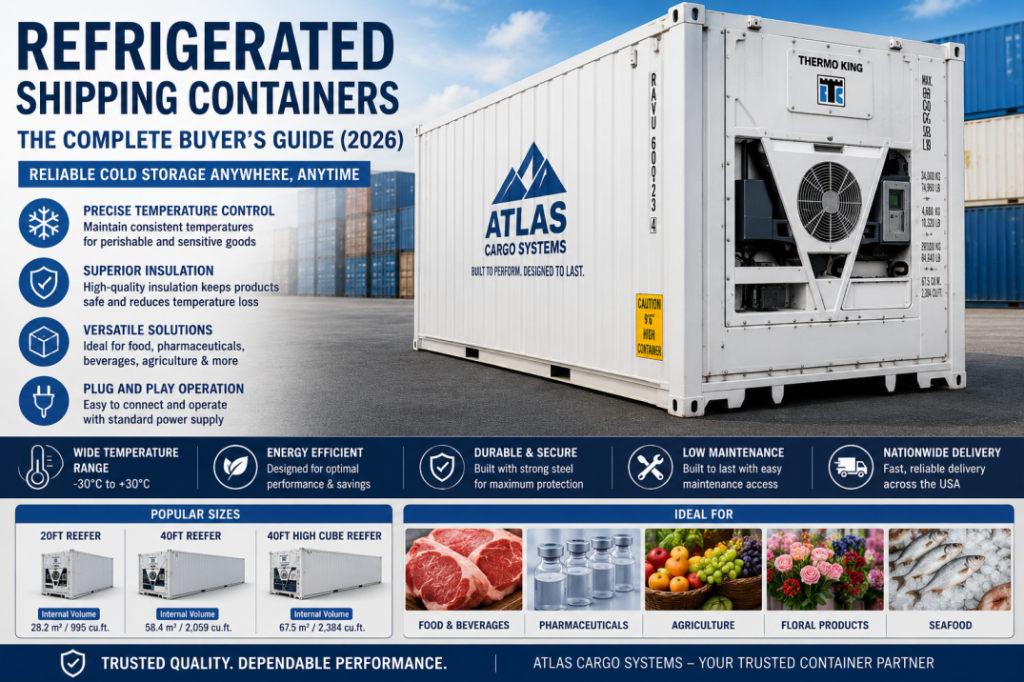
A refrigerated shipping container is an insulated steel container equipped with an integrated refrigeration system designed to maintain specific temperature ranges.
Unlike standard containers, reefer containers actively cool or heat their interior depending on storage requirements. This makes them ideal for transporting and storing products that require consistent environmental conditions.
Common Refrigerated Container Sizes
The most popular refrigerated shipping container sizes include:
| Container Size | Common Applications |
|---|---|
| 20ft Reefer Container | Food Storage, Medical Supplies |
| 40ft Reefer Container | Commercial Storage and Distribution |
| 40ft High Cube Reefer | Large-Scale Cold Storage |
These containers provide excellent storage capacity while maintaining strict temperature control.
Benefits of Refrigerated Shipping Containers
1. Precise Temperature Control
Modern reefer containers maintain accurate temperature ranges suitable for a variety of applications.
2. Exceptional Insulation
Their insulated walls help minimize temperature fluctuations while improving energy efficiency.
3. Versatile Applications
Businesses use refrigerated containers for:
- Food storage
- Pharmaceutical products
- Medical supplies
- Floral products
- Beverage storage
- Agricultural products
- Event catering
4. Reliable Performance
Designed for international shipping and industrial use, refrigerated containers offer dependable performance even in demanding environments.
5. Portable Cold Storage
Unlike traditional cold rooms, refrigerated containers can be transported and installed almost anywhere.
Common Uses for Refrigerated Shipping Containers
Food Industry
Restaurants, grocery stores, and distributors commonly use refrigerated containers to store:
- Meat
- Seafood
- Dairy products
- Frozen foods
- Fresh produce
- Beverages
Pharmaceutical Industry
Medical organizations rely on reefer containers to store:
- Vaccines
- Medicines
- Medical equipment
- Laboratory supplies
Agricultural Applications
Farm owners frequently use refrigerated containers for:
- Fruits
- Vegetables
- Seeds
- Harvest storage
Event and Catering Businesses
Refrigerated containers provide temporary cold storage during:
- Festivals
- Weddings
- Sporting events
- Commercial exhibitions
How Refrigerated Shipping Containers Work
A refrigerated container uses an integrated refrigeration unit that circulates conditioned air throughout the container.
Key components include:
- Refrigeration unit
- Insulated walls
- Air circulation system
- Temperature monitoring controls
- Electrical connection
These components work together to maintain a consistent internal temperature throughout the storage period.
Refrigerated Container Temperature Range
Temperature ranges vary by model and manufacturer.
Many refrigerated containers can maintain temperatures suitable for:
- Frozen products
- Chilled products
- Temperature-sensitive inventory
Selecting the correct container depends on your storage requirements and operational needs.
How Much Does a Refrigerated Shipping Container Cost?
Several factors influence pricing, including:
- Container size
- Condition
- Refrigeration system specifications
- Delivery distance
- Optional modifications
- Market demand
Requesting a personalized quote provides the most accurate pricing information.
Delivery Requirements
Before scheduling delivery:
- Confirm truck access.
- Prepare a stable foundation.
- Verify power requirements.
- Ensure adequate ventilation around the refrigeration unit.
- Plan the final installation location.
Proper preparation helps maximize performance and reduce installation delays.
Maintenance Tips
Regular maintenance improves reliability and extends the lifespan of refrigerated containers.
Best practices include:
- Inspect refrigeration components regularly.
- Clean air filters when required.
- Monitor operating temperatures.
- Inspect electrical connections.
- Schedule preventative maintenance.
- Keep the interior clean and dry.
Routine servicing helps maintain consistent temperature control.
Best Practices When Buying a Refrigerated Shipping Container
- Determine your temperature requirements.
- Choose the correct container size.
- Verify electrical specifications.
- Compare new and used options.
- Consider future storage needs.
- Purchase from a reputable supplier.
Frequently Asked Questions
What is a reefer container?
A reefer container is another name for a refrigerated shipping container designed for temperature-controlled storage and transportation.
Can refrigerated containers be used for long-term storage?
Yes. Many businesses use refrigerated containers as permanent or temporary cold storage solutions.
Are refrigerated containers energy efficient?
Modern refrigerated containers are designed to provide reliable temperature control while maintaining efficient performance.
What industries use refrigerated shipping containers?
Food distribution, agriculture, pharmaceuticals, hospitality, healthcare, and event management industries commonly use refrigerated containers.
How long do refrigerated shipping containers last?
With proper maintenance, refrigerated shipping containers can provide dependable service for many years.
Conclusion
Refrigerated shipping containers provide a practical and flexible solution for businesses that require temperature-controlled storage. Their advanced refrigeration systems, durable construction, and portability make them ideal for a wide range of commercial and industrial applications.
Before purchasing a refrigerated container, evaluate your temperature requirements, installation site, and storage needs to ensure you select the right solution for your business.
