
Uncategorized
Shipping Container Prices (2026): Complete Buyer’s Guide
Jul
Introduction
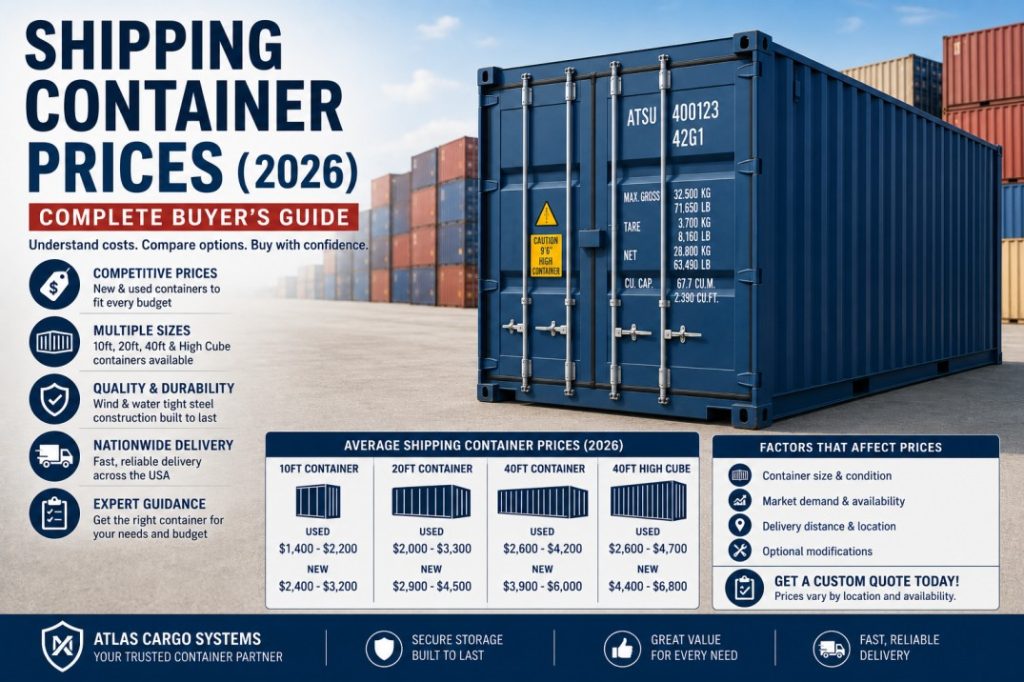
Understanding shipping container prices is one of the most important steps before purchasing a container. Prices can vary depending on the container’s size, condition, age, location, and delivery requirements. While two containers may look similar, several factors can significantly affect their final cost.
In this guide, you’ll learn what influences shipping container prices, how to compare new and used containers, and how to make a smart buying decision that delivers long-term value.
What Affects Shipping Container Prices?
Several factors influence the price of a shipping container.
1. Container Size
Larger containers generally cost more than smaller models because they offer greater storage capacity.
Common sizes include:
- 10ft Shipping Containers
- 20ft Shipping Containers
- 40ft Shipping Containers
- 40ft High Cube Containers
Choosing the correct size helps you avoid paying for unnecessary space.
2. Container Condition
The condition of a shipping container has a major impact on its price.
New (One-Trip) Containers
These containers have completed only one cargo journey before being offered for sale.
Advantages include:
- Excellent appearance
- Minimal wear
- Longer expected lifespan
- Ideal for businesses
- Perfect for modifications
Used Containers
Used containers remain structurally strong but show signs of previous service.
Benefits include:
- Lower purchase cost
- Excellent storage performance
- Great value
- Reliable long-term use
3. Market Demand
Container prices change throughout the year based on supply and demand.
Periods of high demand may temporarily increase pricing, while greater availability often results in more competitive prices.
4. Delivery Distance
Delivery costs vary depending on:
- Distance
- Accessibility
- Road conditions
- Truck requirements
- Final placement location
Preparing your site before delivery can help reduce additional service charges.
5. Optional Modifications
Custom features increase the overall purchase price.
Popular modifications include:
- Personnel doors
- Windows
- Roll-up doors
- Shelving
- Electrical systems
- Lighting
- Insulation
- Ventilation
- HVAC systems
New vs. Used Shipping Container Prices
When comparing prices, it’s important to evaluate overall value rather than simply choosing the lowest cost.
New Containers
Advantages include:
- Excellent cosmetic condition
- Longer service life
- Better resale value
- Professional appearance
- Ideal for commercial properties
Used Containers
Advantages include:
- Lower upfront investment
- Excellent structural integrity
- Dependable storage
- Cost-effective solution
Many customers choose used containers for farms, construction sites, and equipment storage.
Is a More Expensive Container Always Better?
Not necessarily.
The best container depends on your intended use.
For example:
- Construction companies often choose quality used containers.
- Retail businesses frequently prefer one-trip containers because appearance matters.
- Homeowners usually select the option that balances condition and budget.
Choosing the right container often provides better value than simply purchasing the most expensive model.
Hidden Costs to Consider
Before purchasing a shipping container, remember to include additional expenses in your budget.
These may include:
- Delivery
- Site preparation
- Foundation materials
- Crane services (if required)
- Modifications
- Permits (where applicable)
Planning for these costs helps avoid unexpected expenses later.
How to Get the Best Value
Follow these tips before purchasing.
- Compare multiple container options.
- Buy the correct size for your needs.
- Prepare your delivery site in advance.
- Purchase from a trusted supplier.
- Inspect the container whenever possible.
- Think about future storage requirements.
Making an informed decision often saves money over the life of the container.
Common Mistakes Buyers Make
Many first-time buyers make avoidable mistakes.
These include:
- Choosing a container that’s too small.
- Ignoring delivery requirements.
- Focusing only on purchase price.
- Forgetting future storage needs.
- Buying from an unreliable supplier.
Avoiding these mistakes helps ensure a better purchasing experience.
Frequently Asked Questions
Why do shipping container prices vary?
Prices change because of container size, condition, age, location, delivery distance, and market demand.
Are used shipping containers worth buying?
Yes. Many used containers provide excellent value and remain structurally sound for many years.
Do High Cube containers cost more?
Generally, yes. Their additional height and increased storage capacity usually make them more expensive than standard containers.
Does delivery affect container pricing?
Yes. Delivery distance and site accessibility often influence the final cost.
Should I buy the cheapest container available?
Not always. Choosing a quality container that matches your intended use usually provides better long-term value.
Conclusion
Understanding shipping container prices helps you make a smarter purchasing decision. Rather than focusing only on the initial cost, consider the container’s condition, intended use, delivery requirements, and long-term value.
Whether you’re purchasing a new one-trip container or a quality used unit, selecting the right container for your project will help maximize your investment for years to come.
